
How to Use ChatGPT to Run Your VTU or Small Business in Nigeria
A lot of the ChatGPT advice aimed at Nigerian entrepreneurs online is, honestly, a little embarrassing, breathless "make a million naira with this one prompt" content that oversells what the tool genuinely does. The real, boring truth is better than that hype: ChatGPT is a genuinely useful assistant for the unglamorous, time-consuming parts of running a VTU or small business, and here is what that actually looks like, honestly, without the exaggeration.
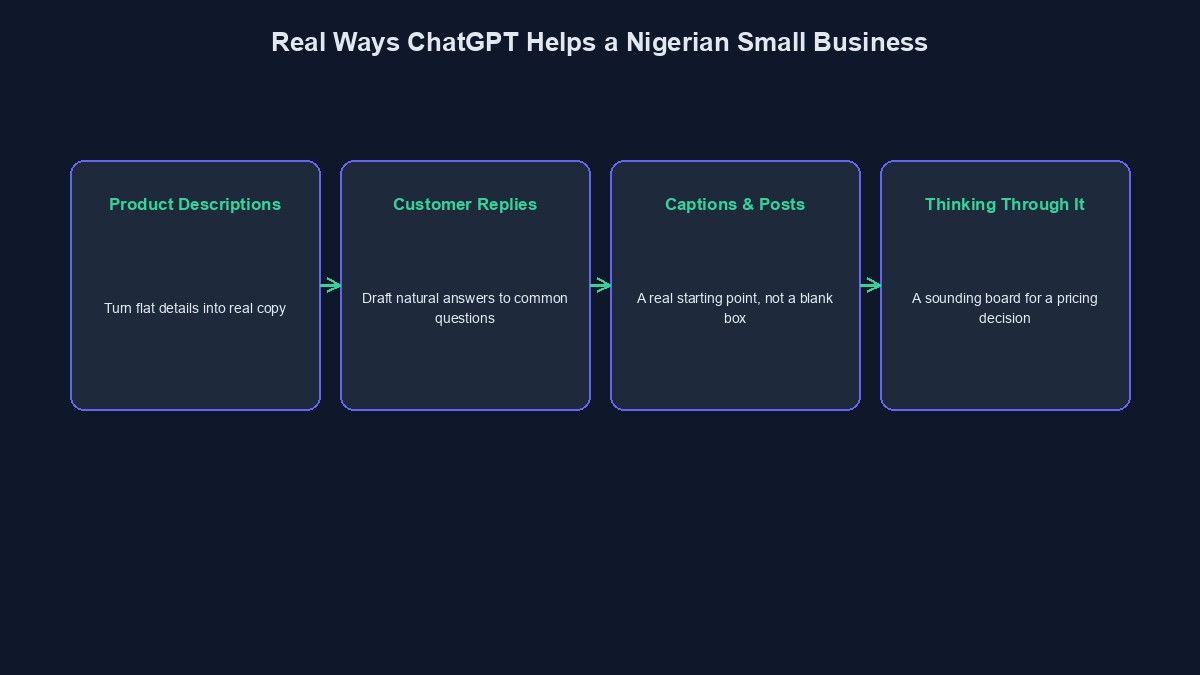
Writing product and plan descriptions that actually sound right
A lot of small business listings suffer from the same problem, a product or a data plan described in three flat, unconvincing words. Give ChatGPT the real, specific details, the plan size, the validity period, who it is genuinely good for, and ask it to write a short, clear description in a specific tone, friendly, professional, direct. It will not know your actual pricing strategy or your actual competitive position, so you still need to review what it writes, but it turns a blank page into a genuine starting point in seconds, which is real, practical time saved.
Customer replies, drafted fast and reviewed before sending
The same handful of customer questions come up constantly in most small businesses, "is this still available," "how long does delivery take," "can I get a discount." Ask ChatGPT to draft a few natural, on-brand variations of your standard replies to these common questions, then keep the ones that genuinely sound like you, not like a generic customer service script. This is not automation by itself, it is faster, better-written manual replies, which is a real, honest improvement even before any technical integration is involved.
Social media captions, without staring at a blank box for twenty minutes
Describe what you are actually posting, a new plan just added, a weekend promo, a genuine customer testimonial, and ask for a few caption options in different tones, short and punchy, warmer and more personal, straightforwardly informative. Pick the one that actually fits, adjust it in your own voice, and post. The real value here is not that ChatGPT understands your brand, it does not, it is that staring at a blank caption box is a genuine, recurring time cost, and having three real starting points removes that specific friction.
Basic business writing: invoices, terms, simple policies
Ask ChatGPT to draft a simple returns policy, a plain-English explanation of your delivery terms, or the wording for a basic invoice template, and it will genuinely produce something clear and reasonably professional. Treat this as a first draft, not a finished legal document, since it does not know Nigerian consumer protection law specifically, or any particular rule your own business needs to follow, and a document that actually matters, a real contract, a real terms-of-service page, deserves a real review from someone qualified, not just AI-generated text taken as final.
Thinking through a pricing or promotion decision out loud
Describe a real decision you are actually weighing, whether to discount your biggest-selling data plan, whether a new delivery fee will put customers off, and ask ChatGPT to think through it with you, the genuine trade-offs, the questions you have not considered yet. It does not know your actual numbers or your actual customers, so it cannot make the decision for you, but a structured back-and-forth, thinking out loud with something that asks reasonable follow-up questions, is genuinely useful for a solo business owner who does not have a co-founder to bounce ideas off.
What it is genuinely not good for, said honestly
It does not know your actual sales numbers, your actual supplier costs, or your actual customer history, unless you type that information in yourself, and it cannot check that information against reality afterward. It is not a bookkeeping system, a real transaction record, or a substitute for actually tracking your numbers properly. And it should never be the final word on anything involving real money, a real contract, or real legal obligation, since it can sound confident while being specifically wrong about something that matters.
A real, important caution about customer data
Do not paste a real customer's phone number, address, or payment details into ChatGPT to help write a reply or resolve an issue. Strip out anything that actually identifies a real person before asking for help drafting something, a generic version of the situation is almost always enough for ChatGPT to help with the actual writing, and your customers' real, private information has no genuine reason to ever leave your own systems in the first place.
A worked example: a VTU reseller's actual Tuesday
Picture a VTU reseller who just added three new data bundles and wants to announce them. They describe the bundles to ChatGPT and get three caption options in minutes, pick the one that sounds like their actual page, and post it. A customer messages asking about a specific bundle's validity, and they ask ChatGPT to help phrase a clear, friendly answer, using the real bundle details they already know, not inventing anything. None of this replaces running the actual business, taking real orders, delivering real value, but it genuinely removes a real, recurring share of the writing and thinking friction that used to eat into an actual business owner's day.
Mistakes worth avoiding
Pasting real customer information into ChatGPT. Strip out anything that actually identifies a real person first; there is almost never a genuine need for their real details to leave your own systems.
Treating a generated policy or legal-sounding document as finished. Anything that actually matters, a real contract, a real terms page, deserves a real, qualified review, not AI-generated text taken as final.
Asking it to decide instead of helping you think. It does not know your actual numbers; use it to think through a decision, not to make one for you.
A short glossary
Prompt: the instruction or question you type to ChatGPT, and the single biggest factor in how useful the answer actually is. First draft: a genuinely useful starting point that still needs your own review, the honest way to treat almost everything ChatGPT writes for your business. Template-based reply: a pre-written, reviewed response used repeatedly for a common question, faster and more consistent than writing fresh every time.
Where to go from here
If customers reach you on WhatsApp specifically, our guide to using ChatGPT for customer service on WhatsApp covers that directly, including what actually changed under Meta's current policy. And if you are running, or planning to run, a real VTU or ecommerce business, you can start building free and see a ready-made platform built for exactly that kind of business, rather than assembling everything yourself from scratch.
Comments
No comments yet. Be the first to share your thoughts.