Packaging Suppliers for Small Nigerian Ecommerce Businesses
Packaging is the part of running an online business that gets the least attention and does some of the most quiet damage when it is wrong. A customer never sees your careful product photography's original file, or the effort you put into a clear description. They see the box, or the bag, as it arrives on their doorstep, dented, damp, or intact and well presented, and that single moment colours how they feel about everything else you did right or wrong before it. This guide covers where to actually source packaging in Nigeria, what to look for beyond price, and how to think about packaging as a genuine part of your product experience rather than an afterthought bought in a rush.
Why packaging deserves real thought, not just the cheapest available option
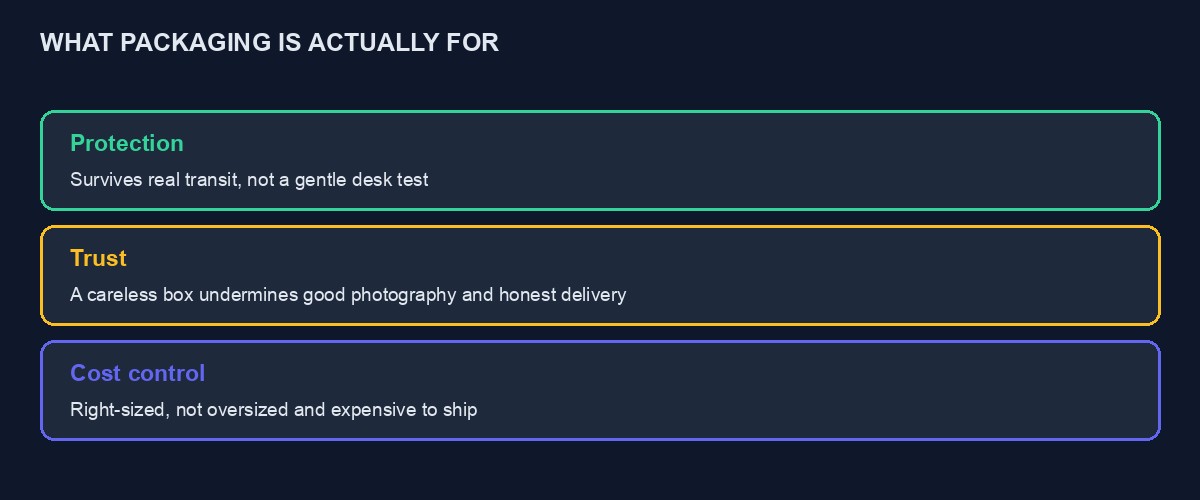
Three separate things are actually happening at once inside a box or bag travelling through the Nigerian delivery system, often across long distances, multiple handling points, and genuinely variable conditions, heat, occasional rain, and the ordinary rough handling of a busy logistics network. Protection, keeping the product physically intact through that journey. Trust, since a customer's first physical impression of your business is the packaging itself, before they even open it. And cost, since packaging that is larger, heavier, or more elaborate than necessary directly increases what you pay for shipping, on every single order, indefinitely. Treating packaging as a genuine decision, weighing these three together, rather than simply buying whatever is cheapest and available nearby, pays for itself in fewer damaged-in-transit complaints and a more consistently positive first impression.
Where to actually source packaging materials in Nigeria
Local packaging and stationery markets. Most major Nigerian cities have dedicated markets or clusters of shops specifically selling boxes, bags, tape, and related materials, often at meaningfully better prices than ordering online, particularly once you are buying in the quantities a genuine business needs rather than a handful at a time. Visiting in person, where practical, also lets you actually feel the material's quality before committing to a bulk order.
Online wholesale and packaging-specific suppliers. A growing number of Nigerian suppliers sell packaging materials specifically, through their own websites or through general online marketplaces, offering the convenience of ordering without visiting a physical market, generally at a modest premium over market prices, which can be worth it for the time saved, especially for a business without easy access to a major packaging market nearby.
Custom branded packaging printers. Once a business has real, consistent volume, custom-printed boxes, bags, or tape carrying your own logo become a realistic, worthwhile investment, and several Nigerian printers specialise in exactly this at various minimum order quantities. This is worth delaying until your order volume genuinely justifies the upfront cost and minimum order commitment, rather than an early expense taken on before you know your actual packaging needs.
Choosing the right packaging for what you actually sell
Match the packaging to the product's real, specific vulnerabilities, not a generic default. Fragile items, ceramics, glass, certain electronics, need genuine cushioning, bubble wrap or crumpled paper, not just a sturdy outer box, since the outer box alone does little to protect against an impact if the item inside can move freely within it. Liquids and anything that could leak need a sealed inner layer, a bag or wrap, in addition to the outer packaging, protecting both the product and everything else in transit alongside it if a leak does occur. Clothing and soft goods can generally use lighter, less rigid packaging, a well-sealed poly mailer rather than a full box, saving on both material cost and shipping weight without meaningfully increasing damage risk for genuinely soft, flexible goods.
Sizing packaging correctly, which most sellers get wrong in one direction
Oversized packaging is a surprisingly common, quietly expensive mistake: a box noticeably larger than the product it contains costs more to ship, since many couriers price partly by size as well as weight, and gives a product room to shift and be damaged in transit precisely because it is not held snugly in place. Choose packaging sized closely to your actual product, with just enough room for appropriate cushioning material, rather than defaulting to one larger, one-size-fits-most box for convenience across your entire product range.
The small touches that genuinely affect how a customer feels
Beyond pure protection, a few low-cost additions meaningfully shape a customer's first impression without requiring a significant packaging redesign. A simple thank-you note, even a small, printed card rather than a handwritten one for a business shipping real volume, costs very little and is disproportionately remembered by customers, who frequently mention it specifically in reviews. Branded tape, even a simple, inexpensively printed roll rather than a fully custom box, adds a recognisable, professional touch at a fraction of the cost of custom boxes. And genuinely careful, tidy packing, items arranged neatly rather than loosely thrown in, is noticed even by customers who could not articulate exactly why a particular unboxing felt more trustworthy than another.
Balancing presentation against cost, honestly
It is worth being direct about a real tension here: more elaborate, more branded packaging costs more, on every single order, and that cost needs to be genuinely reflected in your pricing rather than quietly eating into your margin without you noticing. Calculate your actual packaging cost per order explicitly, and weigh it against what it is realistically buying you, fewer damaged-in-transit complaints, a better first impression, more shares and mentions from a genuinely nice unboxing experience, rather than adding presentation purely because it looks appealing on someone else's page without checking whether it makes sense for your own specific margins and price point.
A worked example: fixing a real, specific damage pattern
Picture a small business selling handmade ceramic mugs, experiencing a damage-in-transit rate high enough that it was noticeably eating into profit through free replacements sent for damaged orders. Reviewing the actual damage reports specifically, rather than treating the losses as a vague, unavoidable cost of shipping fragile goods, reveals a consistent pattern: mugs packed in a snugly sized box with minimal cushioning, relying mainly on the box itself rather than genuine internal protection, arrived cracked specifically when other, heavier items had been placed on top of the parcel during transit, a common and largely unavoidable reality of how parcels are actually handled and stacked.
The fix involves two specific, deliberate changes: a slightly larger box, sized to allow genuine cushioning material around each mug rather than a snug fit against the mug alone, and a clear, printed "fragile, this way up" label, which, while not a guarantee of careful handling, measurably reduces mishandling when couriers can see it clearly on the outside. Within a month of the change, the damage rate drops meaningfully, and while the slightly larger, better-cushioned packaging costs a little more per order in both material and shipping weight, it costs considerably less than the free replacements and refunds the previous packaging approach was quietly generating every month.
Mistakes to avoid when buying and using packaging
Buying a single packaging size for a genuinely varied product range. A box sized correctly for your largest product wastes material and shipping cost on every smaller item sent in the same oversized packaging, and stocking two or three sizes matched to your actual range usually pays for the small added complexity within a few months.
Choosing custom branded packaging before volume justifies the minimum order. A large upfront commitment to custom-printed boxes, made before you have a stable, predictable order volume, can leave a small business holding hundreds of boxes sized or branded for a product range that has since changed.
Ignoring how packaging actually performs, only how it looks. An attractive box that does not genuinely protect the product inside solves the trust problem while creating a damage problem, and the two need to be weighed together, not treated as though good presentation alone is sufficient.
Not testing packaging against a real, rough journey before committing to it at scale. Send yourself, or a trusted colleague in another city, a genuine test shipment using new packaging before switching your entire order volume over to it, the same real-world testing principle covered in our guide to choosing a courier.
A note on sustainability, briefly
A growing number of Nigerian customers, particularly younger, urban buyers, notice and appreciate genuinely reduced or recyclable packaging, and it is worth knowing this is not purely a cost-cutting or presentation decision, it can be a real, if modest, point of positive difference. This does not mean over-investing in elaborate sustainable packaging before your margins can support it, but where a lighter, less wasteful option performs equally well protecting your specific product, it is often worth the modest extra thought over a heavier, more wasteful default chosen purely from habit.
How packaging choices interact with your pricing strategy
A detail many sellers overlook until it becomes a real problem: if your pricing includes free or flat-rate shipping, an unnecessarily large or heavy packaging choice directly erodes your margin on every single order, silently, because the extra cost is absorbed into a shipping figure the customer never sees broken down. Reviewing your actual packaging weight and size against your shipping pricing periodically, particularly after any change to either your packaging or your courier, catches this kind of quiet margin erosion before it accumulates across months of order volume into a genuinely significant, avoidable loss.
A short checklist for choosing your packaging
Match the packaging specifically to your product's real vulnerabilities, not a generic default. Size it closely to the actual product, with room only for appropriate cushioning. Source materials from a genuine market or wholesale supplier once your volume justifies it, rather than buying small, expensive retail quantities indefinitely. Add one or two low-cost, high-impact touches, a thank-you note, simple branded tape. Calculate your real packaging cost per order and reflect it honestly in your pricing. And review any real damage-in-transit pattern specifically, the way the worked example above did, rather than treating occasional damage as simply unavoidable.
Where this fits into running your store well
Packaging sits alongside the other unglamorous, high-leverage operational details covered in our guides to reducing failed deliveries and choosing a courier, all of which matter more to a growing Nigerian online business's real success than most sellers initially expect, precisely because they are easy to overlook while focused on the more visible parts of the business like marketing and product selection.
If you are building or running your store on our ecommerce builder, tracking product weights and dimensions alongside your catalogue makes calculating real, accurate shipping costs and choosing appropriately sized packaging considerably more straightforward than managing it separately in a spreadsheet. You can start building free to see it directly.



Comments
No comments yet. Be the first to share your thoughts.